
Students' Dean's Office (youth affairs, spiritual and educational work)
The Students' Dean's Office is responsible for youth affairs and students' spiritual and moral education at the university; it brings together the student clubs, health and sport, the alumni office and the psychological service.
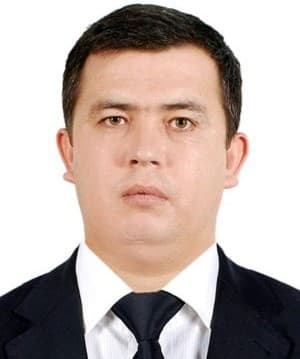
Head
About the office
The Students' Dean's Office was set up in the university's new structure under Resolution PQ-416 of the President of the Republic of Uzbekistan of 8 November 2022, “On measures to further improve the system of training personnel in architecture and construction”. It comprises:
- Student clubs;
- Health and sport;
- The alumni office;
- The psychological service office.
The office leads the university's spiritual and educational work: it coordinates the regulations that govern it, gathers the experience of faculties, divisions and departments, prepares and publishes literature, and carries out measures that shape students' spiritual and moral outlook.
General provisions
- the office is established by order of the rector;
- its working group is made up of leading specialists in the field and academic staff;
- it works under the vice-rector responsible for spiritual and moral education;
- it works together with the deans of faculties, heads of divisions, departments and group tutors;
- it follows the regulations of the Centre for Spirituality and Enlightenment under the Ministry of Higher and Secondary Specialised Education, and its own current and long-term work plans.
Aims and tasks
The office's aim is to bring up students loyal to national and universal values, to broaden their spiritual and aesthetic outlook and sharpen their thinking, to protect them from the pressures of mass culture, and to see them grow into devoted citizens of independent Uzbekistan.
Its tasks:
- holding events connected with the spiritual and educational work carried out in the country;
- fostering moral, aesthetic, civic and legal values among students;
- organising conferences and meetings rooted in national customs and values;
- supporting work that develops students' mental and physical abilities;
- setting the university's programme of moral education and drafting the regulations and guidance it needs;
- working with the city and district branches of the Republican Centre for Spirituality and Enlightenment, foundations and public organisations.
Powers of the office
- overseeing moral education in the faculties and their compliance with the ministry's orders and instructions on it;
- taking part, with its recommendations, in meetings on appointing and dismissing deputy deans for moral education;
- giving deans and heads of departments instructions and recommendations on moral education;
- monitoring and assessing how teachers fulfil the “spiritual and educational work” item of their annual workload;
- reporting at the end of each semester on the deputy deans' work in moral education;
- recommending exemplary divisions, faculties and departments for recognition.
Work so far
- spirituality corners, bookshelves, exhibitions and display boards have been set up in the faculties, divisions and departments, the Information Resource Centre and the student residences;
- a mentors' council of experienced teachers was formed; it discusses mentoring hours, students' attendance and assessments, and meetings with parents;
- special courses on President Sh.M. Mirziyoyev's addresses to the Oliy Majlis and his interviews explain the reforms under way in the country;
- the social sciences and humanities departments have held many conferences, round tables and debates;
- together with law-enforcement and health authorities, the university runs programmes to prevent terrorism, religious extremism, fundamentalism, offending, drug addiction and AIDS, and takes students to films and plays on these themes.
The university celebrates Independence Day, Teachers' and Mentors' Day (1 October), the Day of the Uzbek Language (21 October), Constitution Day (8 December), New Year, Defenders of the Motherland Day (14 January), International Women's Day (8 March), Navruz (21 March) and the Day of Remembrance and Honour (9 May).
Student clubs and residences
Making good use of students' free time is a priority for the university. It has 28 student clubs; the most popular include Zakovat (the intellectual quiz), Yosh Kitobxon (Young Reader), Ulug‘bek Vorislari (Ulugbek's Heirs), Ulug‘bek Yulduzlari (Ulugbek's Stars), Munozara (debate) and Mushoira (poetry). More than 1,000 students take part.
The student residences have a spirituality and enlightenment room, a canteen, showers, a laundry, recreation and study rooms, and hygiene rooms for female students.
Leadership over the years
Associate professors K.G‘. G‘aniyev and B.S. Qarshiyev served as vice-rectors for spiritual and moral education, and S.N. Norov as head of the spirituality and enlightenment department. They were followed by O. Hayitov as vice-rector for youth affairs and spiritual and educational work and B. Saidov as dean of students.
The vice-rector for youth affairs and spiritual and educational work is now Sh.X. Uzoqov, and the dean of students Sh.U. Bozorov.